To the west of the town centre is the church of Saint George, built in a typically English Neo-Gothic style.

St George's Church
Church erected in the 19th century in honour of the Duke of Albany
Discover and book the top Cannes sights
Church erected in the 19th century in honour of the Duke of Albany
To the west of the town centre is the church of Saint George, built in a typically English Neo-Gothic style.

Rugged landscape of red rock stretching from Provence to the coastline
A volcanic range of mountains covering around 32,000 hectares and stretching between Saint-Raphael and Theoule-sur-Mer.

Russian Orthodox Church built in the late 19th century
Set within the affluent residential area of Quartier de la Californie, is the pretty Church of Saint Michael the Archangel.
Read more about St Michael the Archangel Russian Orthodox Church

Beautifully restored French castle with art gallery & gardens
Built in the 14th century, this chateau has been restored and turned into an art exhibition space, visitor centre and venue for weddings and other functions.

Stunning greenery & colour explosion on the coastline of the Cote d'Azur
A magnificent example of Mediterranean gardens with a large olive grove, fountains and of course the wonderful Antibes roses!

Museum within a medieval castle, situated in the heart of Cannes Old Town, Le Suquet
The Castre Museum is located on the Suquet hill, dominating the city of Cannes. From the top of the medieval tower the views across the bay and the Lerins islands are fantastic and not to be missed.

A unique festival of shapes, colours & music 60 metres below ground
The cave boasts a beautiful landscape and mineral gems that are the result of the slow and steady flow of water and limestone. Sound and lighting have been added to make the forms more spectacular.

Medieval abbey situated in the town of Valbonne
Founded in the 13th century by monks from the Order of Chalais, the church was built between 1199 and 1230. It features minimalist architectural lines, typical of the order which reached its peak at this moment, before its decline and disappearance in 1303.

Stunning natural lake situated inland west of Cannes and Antibes
Situated in the Fayence area of the Var, not far from the south coast of France, this lake offers a welcome respite in the heat of the summer months.

Natural rock formations in a subterranean landscape
The awe-inspiring caves of Saint Cézaire are six million years old. Discovered by a farmer digging his field in 1890, they boast a wealth of beautiful, natural rock formations in fantastical forms.

Discover nature just an hour north of Nice
The Mercantour National Park is composed of six valleys, with peaks reaching over 3000 metres, glacial lakes, plenty of wild animals and flora unique to Europe.
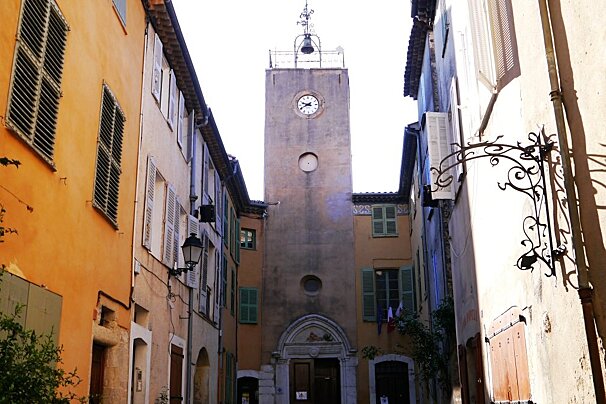
15th-century catholic church in Biot
Classified as a historic monument this 15th-century catholic church is located in the heart of the village of Biot.
Read more about Eglise de Biot, Saint Marie Madeleine church, Biot

Iconic boulevard along the Mediterranean sea
The Promenade de la Croisette is the true heart of Cannes. Under the shade of pine and palm trees, this boardwalk stretches for over three kilometres. A great place to soak up the sun and the sea breeze while you check out the best luxury shops and hotels.

Art exhibition space in the last remaining part of the old Grand Hotel
La Malmaison used to be a part of the original 19th century 'grand dame' hotel - the Grand Hotel - which was demolished and then rebuilt in 1963.

Modern & contemporary art gallery on La Croisette
This gallery has an impressive collection of post-impressionists such as Marc Chagall, Hans Hartung, Victor Vasarély, André Marfaing or Georges Mathieu, as well as a selection of contemporary artists

Dramatic scenery, imposing cliffs and secluded coves near Saint-Raphael
Les Calanques de l'Esterel are rocky inlets and coves that expand from Saint-Raphael to Mandelieu-la-Napoule and drop steeply into the limpid waters of the Mediterranean.

Provencal mill dating back to 14th century, now a museum
Forville Mill dates back to the 14th century. Some of the original presses are still on display, as well as traditional Provencal objects.

Wonderful art deco style villa and Mediterranean gardens
Built by painter Jean-Gabrial Domergue in 1929 it was originally named Villa Fiesole. The style of the villa is highly influenced by the Italian Renaissance style and a Tuscan villa that the painter had seen near Florence.